
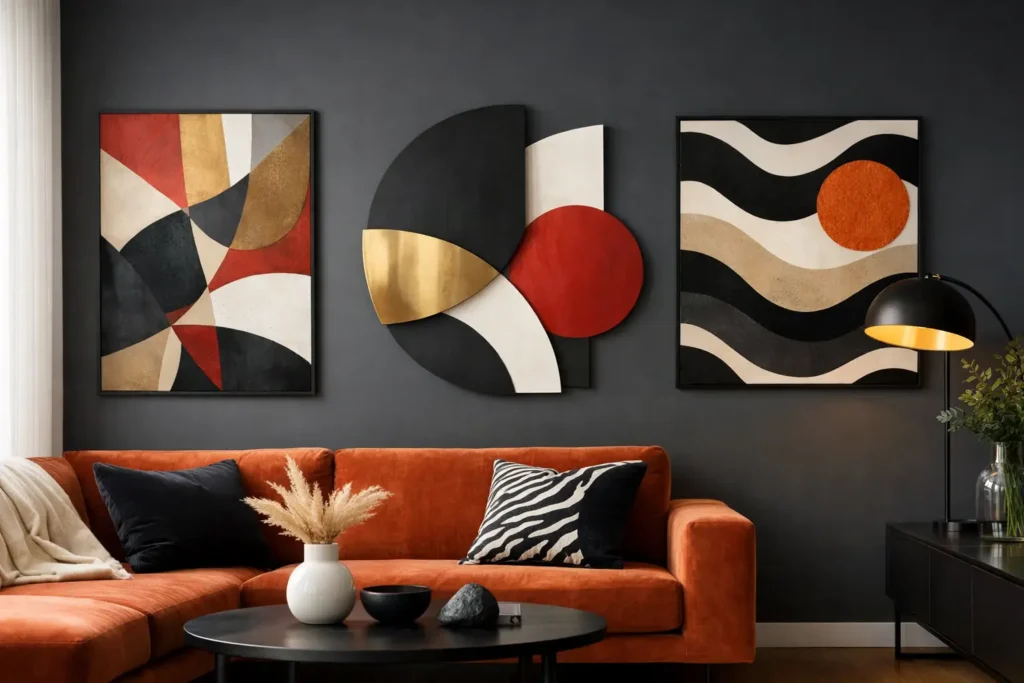
A blank wall can flatten a room fast. The furniture is right, the lighting works, the palette is clean – and still the space feels unfinished. Usually, the missing piece is art with presence. This modern wall art guide is built for people who want more than filler. You want work that sharpens the mood of a room, sets the tone, and says something about your point of view.
Modern wall art is not one narrow style. It is a visual attitude. It leans on contrast, restraint, form, and intention. Sometimes that means conceptual black-and-white prints with sharp negative space. Sometimes it means surreal portraiture, retro graphic tension, or a single statement poster that shifts the entire room. The common thread is clarity. Good modern art does not beg for attention. It commands it.
What modern wall art actually does
The strongest interiors are not built around objects alone. They are built around tension, rhythm, and focal points. Art is one of the fastest ways to create all three.
A large piece over a sofa can anchor the room and give the furniture a reason to exist together. A pair of prints in a hallway can turn a transitional space into something deliberate. A bold artwork in an office can make the room feel less corporate and more authored. That is the difference between decorating and curating. One fills space. The other shapes it.
This is also why generic wall decor falls flat. If it could work in any room, it usually says nothing in yours. Modern interiors benefit from artwork with a distinct edge – minimal, graphic, conceptual, dramatic, or slightly disruptive. The goal is not to match everything perfectly. The goal is to create a room with a pulse.
A modern wall art guide to choosing the right style
Start with the room, but do not stop there. Think about the emotional temperature you want. A bedroom may need softness, but softness does not have to mean bland. A living room can carry more visual weight. An entryway can handle something sharp and immediate because it is your first statement.
If your interior is already layered with texture, curves, and warm neutrals, black-and-white art can bring discipline. It cuts through softness and adds architecture to the walls. If your room is very minimal – low furniture, restrained palette, open space – surreal or retro-inflected work can stop it from feeling sterile.
Portraits create intimacy and tension. Abstract or conceptual pieces create atmosphere. Typography and statement posters bring attitude, especially in workspaces, studios, and urban apartments. There is no single right category. There is only the right relationship between the artwork and the room.
That relationship matters more than trend cycles. A print that looks striking on its own but disappears once framed, placed, and scaled is not the right print for that space. Likewise, a bold piece in a quiet room can be exactly what the room needs. The answer often depends on contrast. If the interior whispers, the art can speak louder. If the room already has volume, choose art with control.
Black and white is not the safe choice
People often treat black-and-white art as neutral. In reality, it can be the most assertive choice in the room. Strong monochrome work creates definition. It highlights structure, intensifies negative space, and gives modern interiors a cleaner edge.
That is especially useful in rooms where color is already doing enough. Instead of introducing another competing tone, monochrome art adds depth without muddying the palette. It feels editorial, precise, and high impact. Used well, it reads less like decoration and more like curation.
Retro, surreal, and conceptual pieces shift the mood fast
If monochrome brings control, more expressive styles bring charge. Retro graphics can add rhythm and cultural texture. Surreal portraits create intrigue. Conceptual art gives the room a more collected, less obvious feel.
These styles work best when the rest of the room leaves them space. You do not need visual clutter around bold art. You need breathing room, clean lines, and confidence in what stays out.
Scale is where most people get it wrong
A great print at the wrong size will always feel off. Too small, and it looks apologetic. Too large, and it can overpower the architecture instead of elevating it.
Over a sofa, art should usually span a meaningful portion of the furniture width rather than sit in the center like a postage stamp. In a dining area, a larger piece can hold the wall and bring intimacy to the space. In a bedroom, art above the bed should feel intentional and balanced, not fragile.
This is where digital wall art has a practical edge. You are not locked into one manufacturer size or one framing format. You can print for the wall you actually have, not the one a mass-market retailer assumed you had. That flexibility matters if you are working with tall ceilings, narrow walls, or a room that needs one dramatic oversized piece instead of three smaller compromises.
If you are unsure, tape out the dimensions on the wall first. Live with the shape for a day. You will know quickly whether the scale has authority or hesitation.
Placement should feel architectural, not random
Art placement is not about filling every empty section of drywall. It is about reinforcing how the room works.
In living rooms, the main artwork usually belongs where the eye naturally lands first – above the sofa, above a console, or on the wall facing the entry. In bedrooms, symmetry often helps, but rigid symmetry is not a rule. A single off-center piece can feel sharper if the furniture and lighting support it.
Hallways are ideal for narrow vertical works or tightly curated pairs. Offices can handle bolder, more conceptual pieces because the environment benefits from focus and edge. In commercial interiors, statement art often does more brand work than a dozen smaller decorative decisions.
Hanging height matters too. Art should connect to furniture and human scale. If it floats too high, it feels detached. If it is too low, it loses presence. The best placement feels integrated, as if the room was designed around the piece from the beginning.
Framing changes the message
The same print can feel gallery-sharp, soft, casual, or expensive depending on how it is framed. Thin black frames tend to emphasize contrast and work especially well with conceptual or monochrome art. White frames feel lighter and cleaner, often a good fit in brighter interiors. Natural wood can warm up cooler modern spaces, though it softens the edge.
A full-bleed print under acrylic can feel sleek and contemporary. A wide mat can create breathing room and a more collected look. Neither is automatically better. It depends on whether you want the artwork to hit immediately or unfold more quietly.
This is another trade-off worth thinking through. If the art itself is aggressive and graphic, a restrained frame often keeps the result sophisticated. If the piece is minimal, a more deliberate framing choice can add weight.
Curated walls beat crowded walls
Not every room needs a gallery wall. In fact, many modern interiors look stronger with fewer pieces and more conviction.
One large artwork often does more for a room than five smaller prints chosen to avoid commitment. That said, a gallery arrangement can work beautifully when the pieces share a clear visual language – similar contrast, related themes, or a disciplined palette. The mistake is mixing without intention.
If you build a multi-piece wall, think in terms of rhythm rather than collection size. Repeat line weight, spacing, and frame style. Let one piece lead and the others support it. A curated wall should feel edited, not accumulated.
Why digital art fits modern living
Design-minded people want flexibility. They move apartments, change layouts, restyle rooms, and rethink scale. Digital wall art suits that reality. It gives you immediate access, removes shipping delays, and lets you print based on your exact space, whether you want a compact frame for a reading nook or a larger statement piece for a dining room.
It also makes experimentation easier. You can choose artwork based on impact instead of worrying whether it comes in the right size or arrives intact. For style-led interiors, that freedom matters. Brands like 21MXM lean into that advantage with premium downloadable prints designed to feel sharp, current, and visually commanding from the start.
The practical side is not separate from the aesthetic side. Convenience is part of modern luxury. Being able to access high-resolution art instantly and print it to suit your wall, frame, and format is not a compromise. It is a cleaner system.
The best modern wall art guide is your room itself
Forget the idea that art has to follow strict formulas to look expensive. The rooms that stay with you usually have one thing in common: conviction. The art feels chosen, not added at the end.
If a piece changes the energy of the room the second you picture it on the wall, pay attention to that. If it feels too polite, it probably is. Modern interiors rarely need more decoration. They need better decisions.
Choose the work that gives the room a point of view, then give it the scale and placement to mean something. That is when a wall stops being empty and starts carrying the space.