
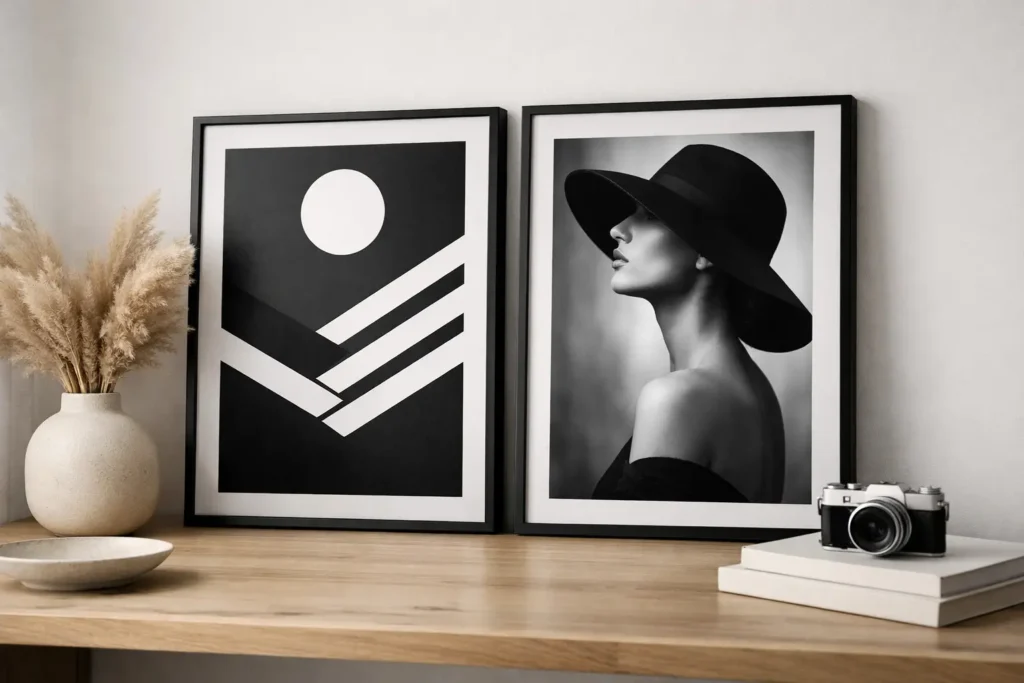
A room can have the right sofa, the right lighting, even the right architecture – and still feel flat. Usually, the missing piece is tension. That is exactly where modern black and white poster prints earn their place. They bring structure, contrast, and a kind of visual confidence that color sometimes softens.
Black and white art does not ask for attention with noise. It commands it with clarity. In a minimal apartment, it sharpens the space. In a layered interior, it cuts through the visual clutter. In a home office, bedroom, hallway, or studio, it creates mood without making the room feel overworked. That balance is what makes it such a lasting choice for design-led interiors.
Why modern black and white poster prints work so well
The appeal starts with contrast, but it does not end there. Strong monochrome pieces create instant hierarchy in a room. Your eye knows where to land. That matters more than people think because good interiors are not just about what is in the room – they are about what gets emphasized.
Modern black and white poster prints also move easily across styles. They can feel architectural in a clean, restrained setting. They can feel editorial in a fashion-forward bedroom. They can lean surreal, graphic, retro, or conceptual depending on the image and typography. That flexibility makes them especially valuable for people who want a distinctive look without locking themselves into one trend.
There is also a practical advantage. Black and white tends to age better than highly trend-driven palettes. A neon piece that felt perfect last year can suddenly feel tied to a moment. A sharp monochrome print usually keeps its edge. Not because it is safe, but because it is precise.
The difference between minimal and forgettable
Not every black and white print feels elevated. Some look intentional. Others look generic. The difference is usually composition.
A strong poster print has presence. It might use oversized typography, stark portraiture, abstract geometry, surreal imagery, or negative space with real discipline. The point is not simply that it is black and white. The point is that the piece understands restraint and uses it to create impact.
This is where many mass-market prints fall short. They rely on monochrome as a shortcut for sophistication, but the image itself says very little. A better print has attitude. It feels curated, not filler. It gives the wall a point of view.
If you are choosing art for a space that needs to feel polished, this distinction matters. Minimal should still feel deliberate. Clean should not mean empty.
How to style modern black and white poster prints at home
The most effective way to style monochrome art is to think about contrast beyond the artwork itself. Black and white pieces look especially sharp against warm neutrals, concrete tones, soft plaster walls, walnut wood, brushed metal, and linen textures. Those materials keep the room from feeling cold while allowing the print to stay crisp.
Scale matters too. A small print can add a refined note to a shelf or narrow wall, but oversized modern black and white poster prints make a stronger statement. One large piece above a bed, sofa, or dining bench can do more for a room than a cluster of weaker images. If the artwork is strong enough, let it breathe.
Gallery walls can work beautifully in black and white, but only when there is a clear rhythm. Mix typography with portraiture, abstraction with graphic forms, or retro references with conceptual photography. What you want is variation inside a controlled palette. What you do not want is a wall of pieces that all speak at the same volume.
Framing shifts the mood. Thin black frames feel crisp and architectural. White frames make the composition lighter and more gallery-like. Natural wood adds warmth and softens the severity of a very high-contrast print. None is universally better. It depends on whether you want the art to feel sharper, quieter, or more tactile within the room.
Room by room, the effect changes
In a living room, black and white poster art often works best as an anchor. It can define the tone of the entire space, especially if the furniture is neutral. Here, bold portrait prints, fashion-inspired graphics, and conceptual abstracts usually have the most authority.
In a bedroom, the mood often shifts from bold to atmospheric. Monochrome still works, but the best pieces tend to feel more intimate or cinematic. Soft grain, surreal figures, or restrained typography can add character without overstimulating the room.
For home offices, black and white is particularly effective because it reduces visual distraction while still feeling elevated. A clean graphic print, architectural composition, or statement quote poster can sharpen focus and make the space feel intentional rather than improvised.
Hallways and entryways are often overlooked, which is exactly why they are powerful places for high-contrast art. These areas benefit from immediate visual impact. A striking monochrome poster can make a narrow or transitional space feel designed, not accidental.
Professional interiors benefit too. In studios, boutiques, waiting rooms, and offices, black and white art communicates polish fast. It feels contemporary, editorial, and globally fluent. That makes it easier to create a branded atmosphere without resorting to obvious corporate decor.
What to look for before you buy
The first question is not whether you like the image on your phone. It is whether the piece will hold presence at scale. Some artwork looks great small and weakens when enlarged. Others become more powerful the bigger they get. Poster prints need enough visual strength to live on a wall, not just on a screen.
Resolution matters for that reason. If you are buying digital art, the file quality has to support large-format printing without losing detail or depth. Crisp edges, rich blacks, and balanced tonal range are not optional in monochrome work. Black and white reveals weakness fast.
You should also think about print material because the same design can shift depending on finish. Matte paper usually suits modern monochrome pieces best because it keeps the look refined and reduces glare. Satin can work if you want more punch. Gloss tends to feel less controlled unless the image is deliberately glossy and fashion-driven.
Then there is the question of permanence. Ask yourself whether the piece reflects a passing mood or your broader visual language. Trendy can be fun, but statement art works best when it still feels like you six months from now.
Why digital poster prints fit modern interiors
There is a reason digital wall art has become a smart choice for style-conscious buyers. Speed matters. Flexibility matters. Control matters.
With downloadable poster prints, you are not boxed into one size, one frame, or one shipping timeline. You choose the scale that suits your wall, the paper that suits your room, and the framing that suits your taste. That freedom is especially useful with black and white art because presentation changes everything. The same piece can feel gallery-clean in a thin black frame or warmer and more residential in oak.
Digital delivery also makes experimentation easier. You can test one oversized piece in a key room, build a pair for symmetry, or create a full gallery arrangement without waiting weeks for stock to arrive. For people who want their space to feel finished now, that matters.
There is a sustainability angle too. Printing locally and only what you actually want tends to be a more considered approach than shipping mass-produced decor across long distances. It is a cleaner model for people who care about both design and waste.
Brands with a strong point of view make this even more compelling. A curated source such as 21MXM offers more than convenience. It offers visual authority – art that feels editorial, sharp, and built for contemporary spaces rather than generic wall filler.
The real power of black and white
The best interiors are not crowded with decoration. They are shaped by decisions. Modern black and white poster prints work because they feel like one of those decisions – clear, deliberate, and expressive.
They can sharpen a quiet room or steady a louder one. They can feel minimal, but they do not disappear. They can be dramatic without becoming chaotic. That range is rare.
If your walls feel unfinished, do not just add art. Add contrast. Add composition. Add something with enough presence to change the room the moment you see it.