
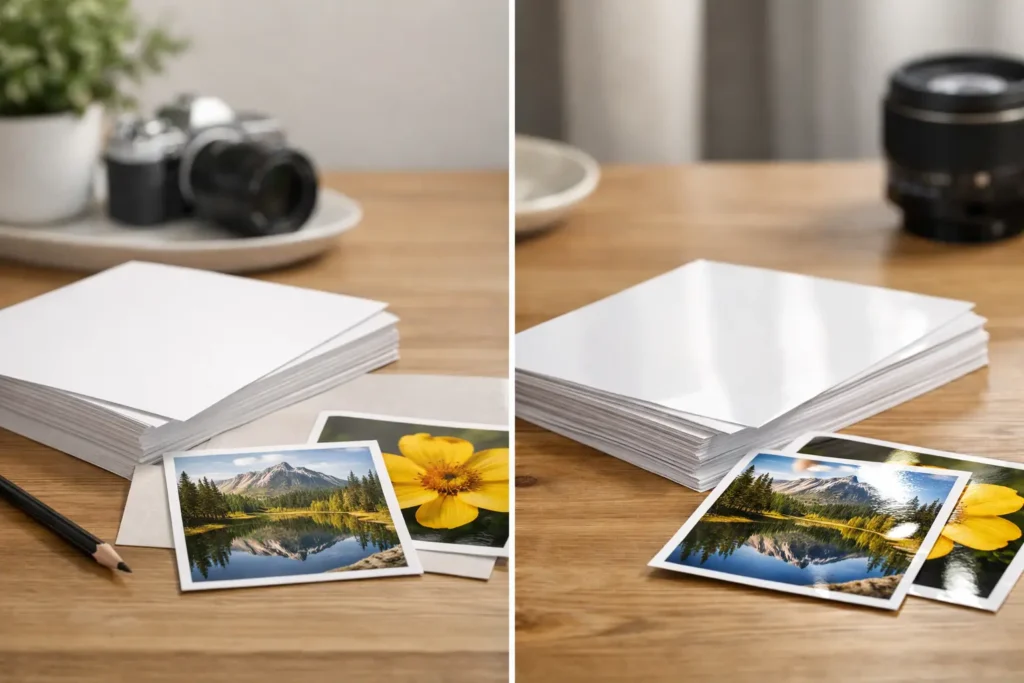
A striking print can fall flat for one simple reason: the paper finish is fighting the artwork. When people compare matte paper vs glossy paper, they are usually asking a deeper design question – do you want your print to feel refined and atmospheric, or sharp and high-impact?
That choice matters more than most people expect. The same file can look dramatically different depending on the finish, especially with bold wall art, black-and-white photography, surreal portraits, and graphic poster designs. Paper is not just a technical detail. It shapes mood, contrast, texture, and how the piece sits in a room.
Matte paper vs glossy paper: the real difference
At the most basic level, matte paper has a non-shiny surface that absorbs more light, while glossy paper has a reflective coating that bounces light back. That changes how color appears, how much detail feels visible, and how the artwork behaves under lamps, daylight, and overhead lighting.
Matte tends to feel softer, more understated, and more gallery-coded. It reduces glare, which makes it easier to view from different angles. Glossy tends to feel brighter, slicker, and more saturated. It can make colors look punchier and blacks look deeper at first glance, but it also introduces reflections that may compete with the image.
Neither is automatically better. It depends on the artwork, the room, and the effect you want.
If your style leans modern, matte often wins
For contemporary interiors, matte paper usually feels more intentional. It has a clean, elevated finish that works beautifully with minimal spaces, monochrome palettes, and statement art that relies on concept and composition rather than surface shine.
This is especially true for black-and-white prints. Matte helps preserve the sophistication of grayscale imagery because it doesn’t throw glare across the darkest areas. You get a more controlled presentation. The shadows feel moodier. The highlights stay calm. The overall result is polished rather than flashy.
Matte also suits artwork with an editorial or architectural feel. Think surreal portraiture, conceptual photography, line-driven poster design, and anything with a restrained palette. If your walls are part of a curated visual identity, matte usually supports that language better.
When glossy paper makes more sense
Glossy paper is built for visual pop. It reflects more light, which can intensify color and create a crisp, high-contrast look that feels vivid and immediate. If you are printing art with rich tones, bright graphics, or retro-inspired palettes, glossy can make those colors feel more energetic.
It can also work well for spaces that want a more commercial or high-glam finish. In some interiors, that polished surface adds edge. If the artwork is playful, loud, or highly saturated, glossy may reinforce the impact instead of distracting from it.
The catch is placement. A glossy print under direct sunlight or strong ceiling lights can become harder to read. That bold finish is only effective when the lighting lets the image stay visible.
Color, contrast, and black levels
One reason this debate matters so much is that paper finish changes perception. Not just slightly – noticeably.
Glossy paper tends to make colors appear more saturated. Reds feel richer, blues feel sharper, and high-contrast compositions can look more dramatic. If you want instant visual punch, glossy has an advantage.
Matte paper presents color in a more restrained way. Some people describe it as softer, but that does not mean dull. On the right artwork, matte color looks more sophisticated, more designed, and less aggressive. It often feels better suited to interiors where the art needs to hold presence without shouting.
Black tones are another factor. Glossy can make blacks look dense and dramatic, but reflections can break that effect. Matte blacks may appear slightly less deep in a technical sense, yet they often look more stable on the wall because there is no surface glare interrupting the image.
For conceptual black-and-white art, that stability is usually more valuable than extra shine.
Texture changes the mood
Paper finish is not only about visibility. It is also about emotional tone.
Matte paper feels tactile, quiet, and refined. It gives artwork a more artistic presence, almost like the print belongs in a gallery, studio, or carefully styled interior. It pairs naturally with oak frames, black metal frames, oversized mats, and minimal spaces that rely on tension, contrast, and restraint.
Glossy paper feels sharper and more produced. Sometimes that is exactly the right move. A glossy finish can give poster-style art a sleek edge, especially in rooms with bolder styling choices. But it can also shift a piece away from premium and toward mass-market if the artwork itself is subtle or atmospheric.
That is the real trade-off. Matte often elevates nuance. Glossy amplifies surface impact.
Matte paper vs glossy paper for wall art
If you are printing wall art for a living room, bedroom, hallway, or office, matte is often the safer and more design-forward choice. Most residential spaces have mixed lighting, and matte handles that reality better. You can view the piece from across the room, from the side, or near a window without getting a reflection across the image.
That matters for statement art. If a print is meant to shape the room, it should stay visible all day, not only when the light hits it correctly.
Glossy can still work for wall art, but it is better when you know the space. If the room has controlled lighting and the print features bright color, graphic punch, or a deliberately polished aesthetic, glossy may suit the concept. In a home office or creative studio with a more stylized setup, that finish can feel bold in the right way.
For many downloadable art buyers, though, flexibility is part of the appeal. You choose your size, your printer, your frame, and your final look. Matte gives you more consistency across spaces, which is one reason it remains a favorite for premium digital prints.
Framing changes the equation
Glass adds another layer to this decision. If you are placing a print behind standard glass or acrylic, glossy paper can create even more reflection because both the paper and the frame surface bounce light. In some settings, that double shine is too much.
Matte paper behind glass is easier to live with. The finish already minimizes glare, so the artwork tends to remain more readable once framed. If you are going for a clean, sophisticated result, matte plus a simple modern frame is hard to beat.
There is one exception. If you are using museum glass or anti-reflective glazing, glossy becomes more viable because the framing reduces some of its biggest downside. Even then, the look will still be sleeker and more polished than matte.
So which one should you choose?
If your art is minimal, monochrome, conceptual, moody, or intended to feel gallery-inspired, choose matte. It complements strong composition, subtle texture, and modern interiors without adding visual noise.
If your art is colorful, graphic, glossy by nature, or designed to hit with maximum brightness, glossy may be the better fit. It works best when you can control lighting and want a more amplified finish.
For most design-conscious spaces, matte is the more versatile option. It feels premium, photographs well in the room, and keeps the focus on the artwork instead of the surface. That is why many modern art buyers lean toward matte when printing downloadable files, especially pieces with dramatic contrast and a curated editorial mood.
At 21MXM, that kind of finish often aligns naturally with the artwork itself – bold, sharp, and built to shape a space without unnecessary shine.
Before you print, ask one simple question: do you want the paper to announce itself, or do you want the image to own the wall? The best finish is the one that makes your art feel deliberate the second it goes up.