
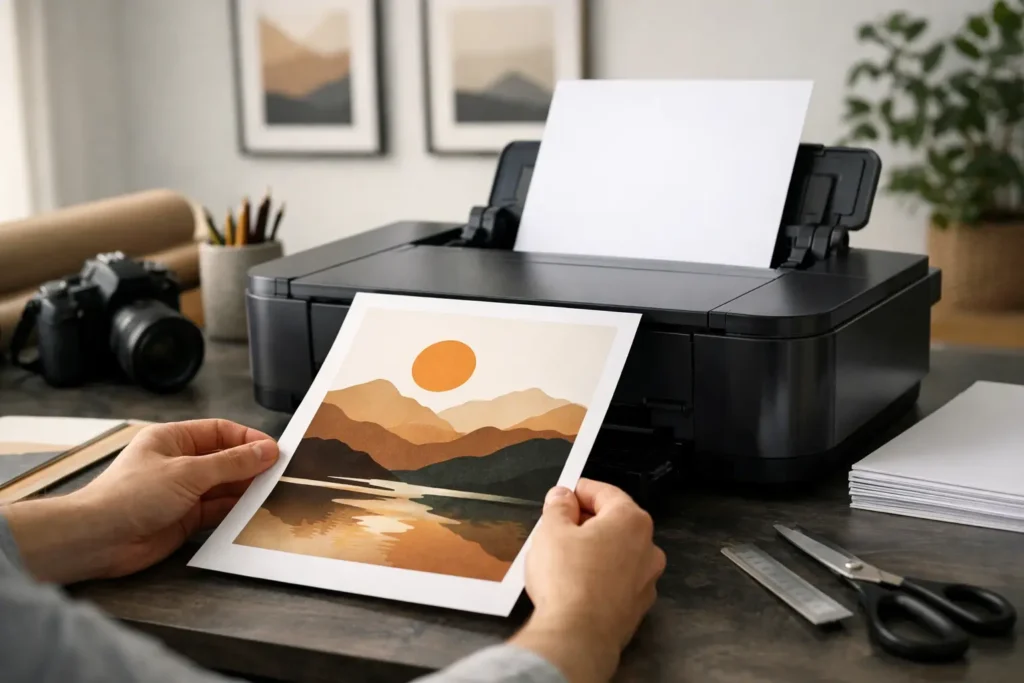
You found the perfect file. The composition is sharp, the contrast is right, and the piece has exactly the kind of attitude your space needs. Then comes the part that decides whether it looks gallery-grade or disappointingly flat: figuring out how to print downloadable art so it actually holds its presence on the wall.
That part is less complicated than people think, but it does require a few smart choices. Size, paper, printer quality, finish, and framing all shape the final result. A strong digital artwork can look expensive and intentional when it’s printed well. The same file can also lose its edge if the print setup is wrong.
How to print downloadable art without losing quality
The first thing to understand is that downloadable art is only as good as the file you print and the format you choose. Most premium digital art comes as high-resolution files designed for large-scale printing, but that does not mean every size and every paper will produce the same effect.
Start by checking the file specifications. You want a high-resolution image, typically 300 DPI at the intended print size, or a large enough pixel dimension to support enlargement without softening details. If the artwork comes in multiple ratios, choose the one that matches your frame or wall plan rather than forcing a crop later. Cropping can work, but with conceptual or graphic pieces, even a slight trim can throw off balance.
It also helps to decide early what role the art will play in the room. A bold black-and-white print over a console table can handle more scale and more contrast than a small filler piece in a hallway. Downloadable art gives you freedom, but freedom works best with a point of view.
Pick the right size for the wall, not just the frame
A common mistake is printing too small. Statement art needs room to speak. If you are styling above a sofa, bed, or desk, the print should usually span a meaningful portion of that furniture width. Tiny art in a large room tends to feel accidental, no matter how beautiful the design is.
That said, bigger is not always better. Highly detailed or surreal portrait pieces often gain intensity at medium-to-large sizes, while minimal poster-style designs can look striking even in smaller formats if the negative space is intentional. The real question is proportion. The artwork should relate to the architecture and furniture around it.
If you are unsure, tape out the print dimensions on the wall before ordering. This takes two minutes and saves you from printing a piece that feels visually underpowered.
Choose a ratio that keeps the composition intact
Digital prints are often offered in common aspect ratios like 2:3, 3:4, 4:5, or international A-sizes. This matters because a 16×20 frame and an 18×24 frame do not crop the same way. If you print the wrong ratio, the image may be stretched, trimmed, or centered with awkward borders.
For contemporary wall art, clean proportion is part of the aesthetic. If the original composition is minimal, any mismatch becomes obvious fast. Match the file ratio to the print size first, then choose your frame.
Home printer or professional print shop?
This depends on the size, finish, and level of polish you want. If you are printing an 8×10 or 11×14 piece for a shelf, hallway, or smaller room, a high-quality home printer on the right paper can look very good. It is fast, cost-effective, and ideal if you like switching artwork seasonally or styling a gallery wall in stages.
For oversized pieces, professional printing usually wins. Large-format printers produce more consistent blacks, cleaner detail, and smoother tonal transitions, especially in monochrome artwork where muddy shadows can ruin the mood. If the piece is meant to anchor a room, this is not the place to cut corners.
There is also a material advantage. Print shops can offer heavyweight fine art paper, satin photo stock, matte poster paper, or even mounted options that most home setups cannot replicate. If your artwork leans dramatic, conceptual, or editorial, material choice changes the entire presence of the piece.
The paper matters more than most people expect
If you want downloadable art to look elevated, paper is not a minor detail. It is the surface your artwork lives on.
Matte paper is often the strongest choice for modern interiors. It reduces glare, feels more refined, and suits black-and-white, minimalist, and graphic work especially well. It gives contrast room to breathe and tends to look more expensive than glossy stock.
Glossy paper boosts saturation and sharpness, but it can also create reflections that fight with the artwork. In a room with strong daylight or overhead lighting, glare can flatten the visual impact. Gloss has its place, especially for bright retro designs or high-color photography, but it is less forgiving.
Fine art paper sits at the premium end. It is thicker, richer, and better for pieces you want to keep long term. If the artwork is central to the room’s identity, this upgrade often makes sense. A bold piece printed on heavyweight archival paper simply carries more authority.
For black-and-white art, ask for deep blacks and neutral tones
Not all printers handle monochrome well. Some produce blacks that drift blue, green, or brown depending on the paper and ink set. If your chosen artwork relies on sharp contrast, request a neutral black-and-white print if you are using a print shop, or run a test print at home before committing to the final size.
This is especially important with conceptual, surreal, or minimalist pieces where tonal precision is the whole mood.
Color settings can make or break the final print
One reason people get disappointed with digital art printing is screen-to-print mismatch. Your phone or laptop is backlit, bright, and often color-boosted. Paper is not. A print will usually look a little more subdued than what you saw on screen.
That does not mean the file is wrong. It means your expectations need to match the medium. If possible, view the artwork on a calibrated monitor before printing. If not, avoid making major color edits yourself unless you know what you are doing. Overcorrecting contrast or brightness can damage the balance of the piece.
For home printing, use the highest quality print setting and select the exact paper type in your printer settings. That sounds technical, but it is basic and worth doing. Printers distribute ink differently depending on whether you choose matte, glossy, or presentation paper. The wrong setting can leave prints dull, oversaturated, or soft.
Borderless or white border?
This is partly a design decision and partly a framing one. Borderless prints feel cleaner, more immediate, and more immersive. They are ideal for graphic posters, large-scale portraiture, and pieces where edge-to-edge impact matters.
White borders can look more curated, especially with minimalist or conceptual art. They create breathing room, echo gallery presentation, and can make the piece feel more intentional in a frame. If you like a refined editorial look, a border is not a compromise. It is a styling choice.
Just make sure it is deliberate. Random printer margins look accidental. A planned border looks sophisticated.
Framing is where the print becomes part of the room
A downloadable print is flexible by nature. Framing gives it architecture.
Black frames create clarity and contrast. White frames feel lighter and more minimal. Natural wood softens modern artwork and works well in warmer interiors. If the art itself is strong and high-contrast, the frame should support it rather than compete with it.
You also do not always need a mat. Some bold contemporary prints look better without one, especially if the artwork already uses negative space. But if the piece is smaller or more delicate, a mat can add scale and presence without increasing the print size.
Acrylic glazing is lighter and practical for large frames. Glass looks crisp but can be heavier and more reflective. Again, it depends on the room and how polished you want the final piece to feel.
Best practices if you want a gallery-worthy result
If you are serious about getting this right, print a smaller test first. It is the easiest way to catch issues with contrast, cropping, or paper finish before spending more on a large-format version.
Keep the original file untouched. Save separate versions only if a print shop asks for a specific format. And avoid repeated resaving or screenshotting the artwork, which can degrade quality fast. The cleanest result usually comes from printing the original high-resolution file exactly as delivered.
If you are ordering from a local print shop, tell them the final size, paper preference, and whether the artwork is meant to look matte, bright, soft, or high-contrast. Clear direction gets better output. Print technicians can do a lot, but they are not mind readers.
For premium downloadable pieces from brands like 21MXM, the file is already built for visual impact. Your job is to print it in a way that respects the composition rather than treating it like a generic poster.
The best downloadable art does not just fill a wall. It sets the tone of the room. Print it with intention, and it will look less like a file you bought online and more like a piece you curated for the space from the start.
When in doubt, go larger, choose better paper, and let the artwork breathe.