
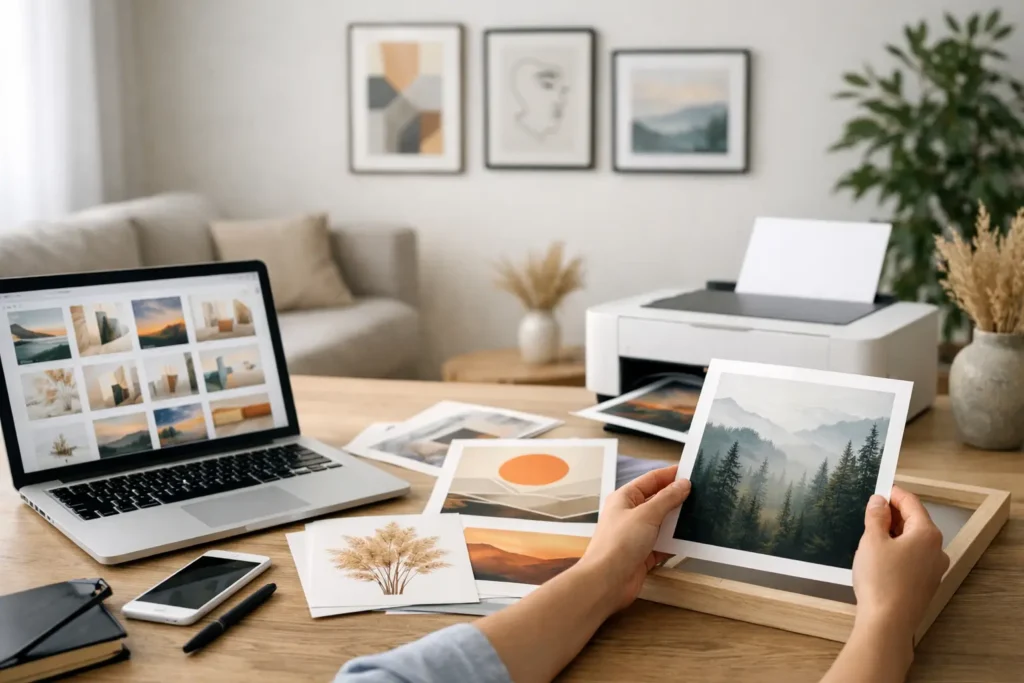
A blank wall can make a room feel unfinished in a very specific way – not empty, just undecided. That is exactly where a digital download art guide becomes useful. Not as a technical manual, but as a sharper way to choose work that gives a space identity fast, without waiting on shipping delays, limited sizes, or someone else’s framing decisions.
Digital art downloads appeal to people who know what they want their rooms to say. Maybe that means a surreal portrait above a console, a black-and-white conceptual piece in the office, or a retro statement poster that cuts through an otherwise minimal bedroom. The format is practical, yes, but the real value is creative control. You get the image immediately, then decide how bold, restrained, oversized, or polished it should feel in your space.
What a digital download art guide should actually help you do
Most advice around printable art focuses too much on file delivery and not enough on design impact. The better question is not just, “How do I print this?” It is, “Will this piece hold the room?”
A good digital artwork choice does three things at once. It creates visual focus, supports the mood of the space, and still leaves room for the rest of the interior to breathe. That balance matters. If the piece is too quiet, the wall disappears. If it is too busy for the room, everything starts competing.
This is why contemporary downloadable art works so well in modern interiors. It gives you access to high-resolution, gallery-inspired visuals with enough flexibility to fit the architecture, furniture scale, and styling direction you already have. You are not adapting your room to a fixed object. The piece adapts to the room.
Start with the room, not the file
Before you think about paper stock or frame color, look at the space itself. A digital print is not floating in isolation. It is in conversation with your sofa, lighting, rug, shelving, and negative space.
In a living room, art often has to anchor the entire seating zone. That usually calls for scale, contrast, or both. A narrow vertical print can work beside a bookshelf or window, but above a sofa it may feel underpowered unless paired as a set. In a bedroom, the mood can be quieter, but quiet does not have to mean bland. Minimal linework, monochrome portraiture, and restrained surrealism can still create a strong atmosphere.
Workspaces are different again. Here, sharper compositions tend to perform better. Graphic black-and-white pieces, statement typography, and conceptual imagery bring structure and edge. Hospitality-style spaces such as entryways, dining areas, and powder rooms can handle more drama because people experience them in shorter bursts.
The point is simple: choose based on spatial function first. The same artwork can feel cinematic in one room and misplaced in another.
Choosing art style in a digital download art guide
Style is not just preference. It is also positioning.
Black-and-white art creates immediate contrast and usually feels more architectural. It suits spaces with clean lines, stone, metal, glass, or soft neutral palettes that need definition. Surreal portraits add tension and personality. They are ideal when a room feels too safe and needs a focal point with attitude. Retro designs can warm up modern interiors by introducing shape, nostalgia, and visual rhythm without making the room feel dated.
Minimal conceptual work has its own power. It leaves more silence in the composition, which can feel sophisticated when the furniture and finishes already carry enough detail. But minimal art depends heavily on scale. If you choose something visually spare, print it too small, and place it on a large wall, the result may feel accidental rather than curated.
That is one of the key trade-offs with digital art. Freedom is a benefit, but it also means you have to make decisions that a traditional ready-framed product would make for you.
Size is where most people get it wrong
People usually underestimate how large wall art should be. The safer choice often looks timid once it is on the wall.
Above a sofa, bed, or sideboard, the artwork should generally relate to the width of the furniture beneath it. If it spans too little of that width, it can feel visually disconnected. Larger prints create confidence. They read as intentional. They also allow bold imagery to do what it is supposed to do – command attention.
That does not mean every piece needs to be oversized. Smaller formats work well in tighter zones, layered shelf styling, or gallery walls. But if you want a single image to transform a room, scale matters more than many people expect.
This is where downloadable art stands out. You are not locked into one manufacturer’s dimensions. If your wall needs a dramatic 24×36 statement piece or a cleaner 18×24 format, you can choose what fits the architecture and mood instead of compromising around inventory.
Printing choices change the personality of the piece
The same artwork can feel crisp, moody, soft, or elevated depending on how it is printed.
Matte paper usually suits contemporary and conceptual work best. It reduces glare and gives black-and-white imagery a more refined presence. Glossy finishes can intensify color and contrast, but they are not always ideal for sophisticated interiors because reflections can distract from the composition.
Textured fine art paper adds depth and can make a digital piece feel more premium. It is especially effective for portraiture, monochrome work, and pieces with subtle tonal variation. Poster paper is more casual and more budget-friendly, which can be perfect if you rotate art often or want to experiment before committing to a final version.
Canvas can work, but it depends on the image. Some bold graphics and conceptual pieces look stronger behind glass or as flat prints because the hard edges stay clean. Softly painterly imagery may translate better to canvas. A digital download art guide should always admit this: the best material depends on the artwork itself, not just the room.
Framing is not an afterthought
A frame can either sharpen the statement or dilute it.
For modern interiors, thin black frames are consistently strong. They add structure without competing with the art. White frames can feel cleaner and lighter, especially in bright rooms with pale walls. Natural wood introduces warmth, which helps if the artwork is high-contrast and the space needs balance.
If the image is bold, keep the frame restrained. If the image is minimal, a mat can give it more presence and breathing room. Floating frames and oversized mats can elevate a simpler print, but only if the proportions are right. Too much empty border and the piece starts to feel distant.
This is one reason design-conscious buyers prefer downloadable art. The frame is not predetermined. You can make it fit your room rather than forcing your room to fit the frame.
How to make downloadable art feel curated, not temporary
There is still a misconception that digital art is somehow less considered than traditional wall decor. That usually comes down to styling, not the format.
To make it feel intentional, repeat visual cues across the room. If your artwork has stark black contrast, echo that in lighting, hardware, or textiles. If it leans surreal or expressive, keep surrounding decor edited so the piece stays central. Let the art lead the mood.
Spacing matters too. A print hung too high almost always loses impact. Art should relate to furniture and eye line, not float near the ceiling like an afterthought. Gallery walls need discipline. The strongest ones share either a color story, frame style, or tonal consistency. Random variety rarely looks curated. It usually looks unresolved.
When done well, downloadable art does not read as a shortcut. It reads as someone with taste making precise choices.
Why this format fits modern living
There is a practical reason digital art has become more relevant. People move more often, redesign more often, and expect interiors to evolve with them. Waiting weeks for a fixed-size piece no longer suits the way many people furnish a home or studio.
Instant access matters. So does flexibility. Renters can print affordably now and upgrade later. Homeowners can test scale before investing in premium framing. Creative professionals can refresh offices, studios, and client-facing spaces without the friction of long lead times. For people who want elevated visuals with less delay, the model simply makes sense.
That is part of why brands like 21MXM resonate with a design-led audience. The appeal is not just convenience. It is the combination of immediacy, strong aesthetic direction, and control over the final presentation.
The smartest way to buy digital art
Buy with the wall in mind. Know your dimensions before you choose. Pick artwork that has enough visual authority for the room, then print it on a material that supports the mood you want – crisp, dramatic, soft, or gallery-clean.
And be honest about what the space needs. Sometimes that means one striking oversized print. Sometimes it means a pair. Sometimes the right move is not more color, but more contrast.
The best wall art does not just fill space. It changes the room’s posture. Choose the piece that makes everything around it look more intentional, and the wall will stop feeling blank for good.