
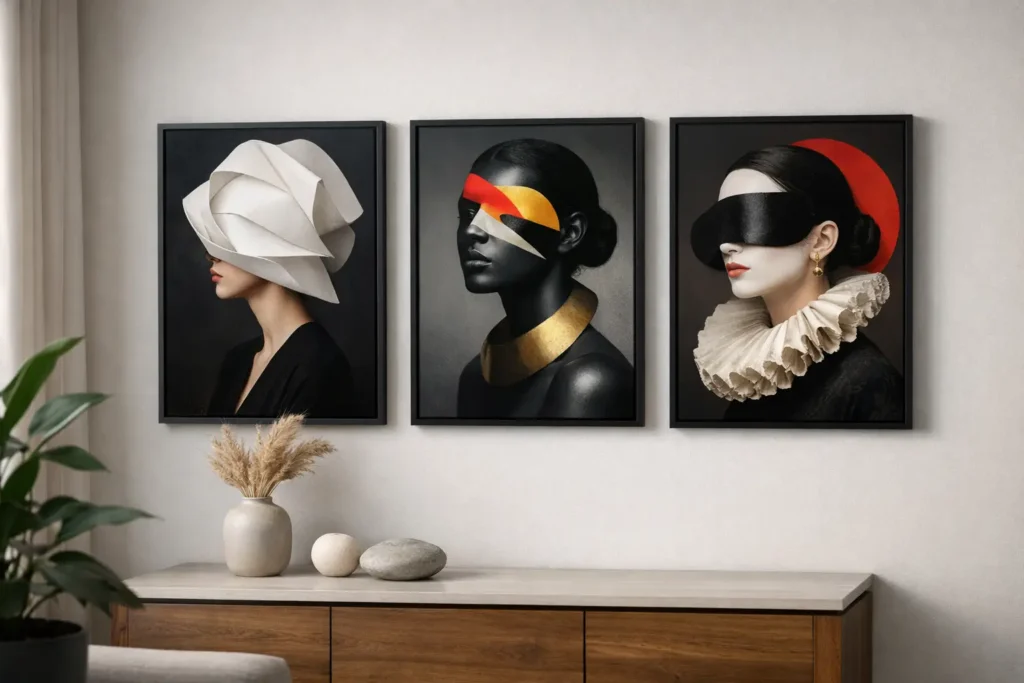
A room can have the right sofa, the right lighting, even the right stone and still feel forgettable. What changes that instantly is art with a point of view. Avant garde portrait prints do exactly that. They interrupt the expected, sharpen the mood, and turn a blank wall into something more editorial, more deliberate, more alive.
These are not polite portraits. They are composed to provoke, distort, seduce, and unsettle in the best way. A face might be fragmented, shadowed into abstraction, layered with surreal details, or stripped down to pure contrast. The result is deeply human but never ordinary, which is exactly why this category works so well in modern interiors.
What makes avant garde portrait prints different
Traditional portrait art usually asks for recognition. It wants a likeness, a mood, a familiar emotional cue. Avant garde portrait prints push in another direction. They treat the face as material – something to crop, exaggerate, obscure, repeat, or reframe.
That shift matters in a space. Instead of simply filling a wall, the artwork establishes a perspective. It tells you the room was designed by someone with taste, not assembled from defaults. You get tension, mystery, and visual drama without needing ornament or excess.
In practical terms, this style often leans on strong black-and-white contrast, minimal palettes, unusual composition, and conceptual styling. A portrait may feel cinematic, surreal, retro-futurist, or starkly graphic. Even when the image is minimal, the effect is high impact.
Why this style works so well in modern interiors
Modern spaces thrive on clarity. Clean lines, sculptural furniture, controlled palettes, and open layouts all create room for one standout element to lead. Avant garde portrait prints are ideal for that role because they bring intensity without clutter.
A bold portrait can anchor a living room that otherwise relies on neutral tones and restrained materials. In a bedroom, it can add intimacy and edge without becoming visually noisy. In a home office or creative studio, it introduces focus and personality – two things generic decor rarely delivers.
There is also a useful design contrast at play. Highly edited interiors can sometimes feel too careful. Portraiture, especially when it is surreal or confrontational, reintroduces emotion. It makes the room feel inhabited by ideas, not just objects.
That said, scale and placement change the outcome. A large-format print with heavy contrast can create gallery-level drama. A smaller print, especially in a pair or salon-style arrangement, feels more curated and intellectual. Neither is better. It depends on whether you want the wall to command the room or reward a closer look.
Choosing the right avant garde portrait prints for your space
The smartest choice is not simply the most dramatic piece. It is the one that aligns with the atmosphere you want to build.
If your space is minimal and architectural, look for portraits with strong negative space, monochrome treatment, and a controlled composition. These feel clean, severe, and sophisticated. They complement interiors built around concrete, black accents, light oak, glass, and matte finishes.
If the room has a softer or more layered feel, a surreal portrait with texture or vintage references can create more depth. Think muted grain, collage elements, dreamlike distortion, or fashion-led styling. These pieces work especially well in apartments and bedrooms where you want mood rather than starkness.
For office interiors, reception spaces, or creative work environments, the best portraits are often the ones with the strongest conceptual edge. Something slightly unexpected holds attention longer. It creates presence without relying on color saturation or decorative detail.
One useful rule is to match intensity, not just palette. A quiet room can handle a visually loud piece if the lines around it are disciplined. A room already filled with pattern, bright color, or layered decor may benefit from a portrait that is simpler and more graphic.
Black-and-white is not the safe option
There is a reason black-and-white avant garde portrait prints remain so compelling. Without color to soften or explain the image, form becomes everything. Shadow, gaze, posture, grain, and composition move to the front.
This gives black-and-white work a sharper architectural quality. It integrates beautifully into contemporary spaces because it behaves almost like a design material. It can echo black metal details, white walls, smoked glass, polished concrete, or dark wood without becoming background art.
It is also harder to outgrow. Color-heavy pieces can be perfect for one specific room and harder to adapt later. A striking monochrome portrait usually has more range. It can move from a bedroom to a hallway, from a rental to a studio, from a home office to a client-facing workspace without losing relevance.
That does not mean color has no place. Some avant garde portraits use a single accent tone or a retro palette to strong effect. But if the goal is timeless impact with maximum flexibility, black-and-white is often the strongest investment.
How to style avant garde portrait prints without diluting the effect
The biggest mistake is over-explaining the artwork through the rest of the room. If the portrait is already bold, let it lead.
Start with scale. Oversized prints feel confident and editorial, especially above a sofa, bed, or console. Smaller pieces need stronger framing and placement discipline or they risk looking incidental. If you are building a gallery wall, keep the edit tight. Too many competing images can flatten the impact.
Framing matters more than most people think. Slim black frames feel crisp and modern. White frames can make a stark image feel more gallery-like and airy. Natural wood introduces warmth, which can be useful if the portrait itself feels cold or severe. Frameless mounting can work in very contemporary spaces, but it needs the right architecture around it.
Spacing is part of the presentation. Give the piece enough negative space to breathe. Avant garde work often depends on tension and silhouette, and crowding it with shelves, decor objects, or adjacent wall clutter weakens the statement.
Material is another variable. A matte fine art print tends to feel more refined and less reflective, which suits conceptual portraiture well. Gloss can intensify contrast, but it can also introduce glare. The better option depends on the lighting in your room and the finish you want overall.
The advantage of downloadable art for statement interiors
Avant garde portrait prints are often chosen because they feel decisive. The buying experience should match that energy.
Downloadable art makes that possible. Instead of waiting for shipping, dealing with stock limitations, or settling for one fixed size, you can move from concept to installation on your own timeline. That flexibility matters when you are designing around exact wall dimensions, ceiling height, furniture proportions, or a specific frame.
It also gives you more control over the final expression. The same portrait can feel intimate at medium scale, commanding at oversized scale, or highly curated as part of a set. For renters, this matters even more. You can adapt the print to the next space without losing the piece you connected with in the first place.
For design-conscious buyers, the appeal is obvious: immediate access, high-resolution quality, and the freedom to print in a way that suits the room rather than the retailer’s default format. That is part of what makes digital wall art from brands like 21MXM feel aligned with modern living. It respects both aesthetics and pace.
When this look may not be right
Strong art is not neutral, and that is the point. But there are cases where avant garde portrait prints are not the right fit.
If a room already has several dominant focal points – dramatic wallpaper, sculptural lighting, bold upholstery, and saturated color – another visually intense element can tip the space into overload. In that case, a quieter abstract or typographic piece may hold the room together better.
The same goes for spaces meant to feel especially calm or restorative. Some portraiture carries a psychological charge that can be thrilling in a hallway, living space, or office but too activating for certain bedrooms. This is less about the category and more about the specific image. Gaze, contrast, and distortion all affect how a piece feels over time.
The best interiors do not chase intensity everywhere. They place it carefully.
More than decor, less than predictable
Avant garde portrait prints sit in a rare sweet spot. They are expressive enough to feel personal, polished enough to feel elevated, and flexible enough to work across homes, studios, and professional spaces. They give a room character without relying on trend-heavy styling or decorative excess.
If your walls feel too safe, this is where to push. Choose the portrait that holds your attention a beat longer than expected. That is usually the one worth living with.