
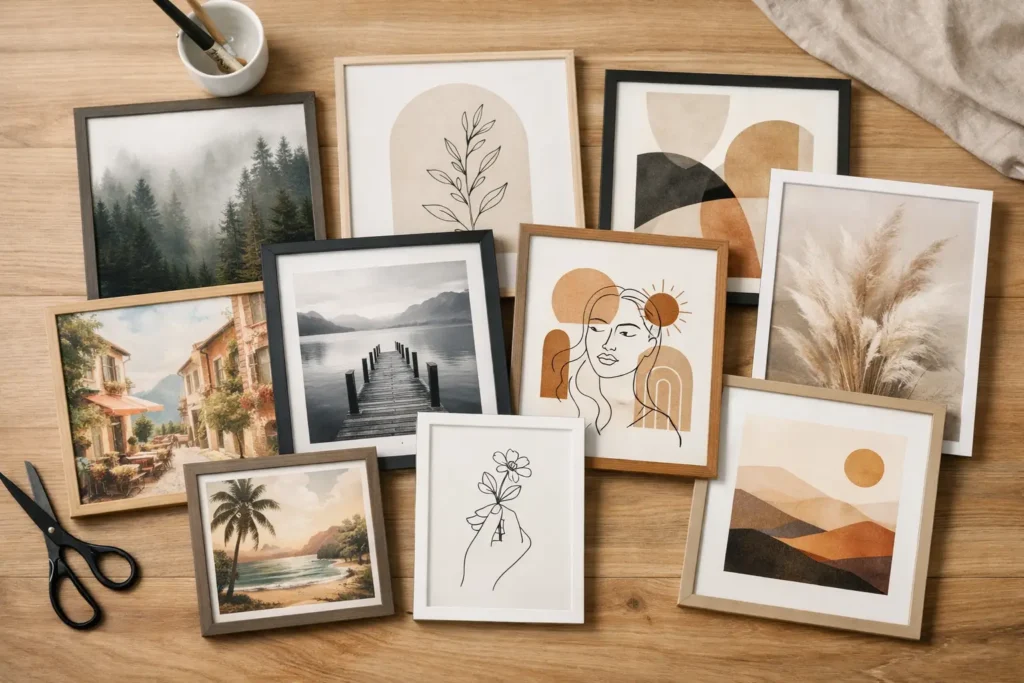
A blank wall can make even a well-furnished room feel unfinished. The best printable wall art styles do more than fill space – they set tone, sharpen identity, and give a room its edge. If your taste leans modern, expressive, and a little more curated than safe, style matters just as much as subject.
Printable art has changed the pace of decorating. You can find a piece that fits your mood, your layout, and your scale, then print it for the exact wall you’re working with. That flexibility is a major advantage, but it also raises the bar. When you are not limited by what happens to be in stock at a local store, there is no reason to settle for generic.
What makes the best printable wall art styles stand out
The strongest printable styles have two things in common. They hold visual presence from a distance, and they keep their character up close. That is especially important in contemporary interiors, where wall art often has to do more than quietly blend in.
A good printable piece should also work across formats. Some styles look sharp on matte paper in a slim black frame. Others become more dramatic at oversized scale or on textured stock. The best styles are not just attractive on a screen. They have enough structure, contrast, and intention to carry a room.
Minimalist black-and-white prints
If your space already has strong furniture, interesting materials, or architectural detail, black-and-white minimalism is hard to beat. This style creates clarity. It cuts visual noise and lets composition do the work.
The appeal is in restraint, but restraint does not mean boring. A high-contrast abstract, a stark photographic study, or a conceptual line-based piece can feel severe in the best way. It brings sophistication without asking for attention through color.
This style works especially well in bedrooms, home offices, entryways, and living rooms with neutral palettes. The trade-off is that weak minimalist art falls flat fast. To look intentional rather than empty, it needs strong composition, tension, and scale.
Surreal portraits
Some rooms need more than polish. They need a point of view. Surreal portraiture brings that instantly.
This style blends the familiar with the unexpected – altered faces, dreamlike symbolism, unusual cropping, or conceptual overlays. It has emotional weight, and that makes it ideal for spaces that should feel personal rather than simply styled. A surreal portrait in a hallway or above a console table can completely shift the atmosphere of the room.
The key here is confidence. Surreal work is not background decor. It becomes the conversation piece, which is exactly why many design-led buyers choose it. If the rest of your space is already busy with heavy pattern or color, a surreal portrait may compete. But in a clean, modern setting, it lands with precision.
Retro poster design
Retro prints have range. They can lean graphic and playful, cinematic and nostalgic, or sharp and fashion-forward depending on the era and execution. What makes retro poster design one of the best printable wall art styles is its mix of personality and structure.
A good retro piece adds color, typography, and cultural attitude without slipping into novelty. It can energize a kitchen, sharpen a studio apartment, or bring unexpected cool to a workspace. In hospitality-inspired interiors, retro posters often create the feeling that the room has been edited rather than decorated.
This style is especially effective when you want art to inject movement. Bold type, aged palettes, and graphic layouts naturally create rhythm on the wall. The caution is balance. Too many retro elements in one room can tip a space into theme territory. One or two strong prints usually hit harder than a full wall competing for the same nostalgia.
Statement typography prints
Words can work like art when the typography is strong enough. Statement text-based prints are direct, modern, and often a little confrontational. They fit spaces that benefit from attitude – offices, dressing areas, entryways, creative studios, and social spaces.
The best typography prints rely on design, not just messaging. Font choice, spacing, scale, and negative space all matter. A short phrase in a commanding layout can feel architectural. It becomes part of the room’s visual structure.
This style is not for everyone. If you prefer softer, quieter interiors, text-based pieces can feel too assertive. But for people who want their walls to say something, literally or visually, typography delivers a clean and contemporary impact.
Abstract geometric art
Geometric abstraction is one of the most versatile printable styles because it can shift depending on color, shape language, and composition. It can feel crisp and minimal, or rich and architectural.
In modern interiors, geometric art works because it echoes the lines already present in the space. Think window frames, shelving, lighting, and furniture silhouettes. That creates cohesion without making the room feel overdesigned.
This is a strong choice for large walls where you want order with edge. It suits living rooms, conference rooms, stairwells, and dining areas. If you are styling a room with softer organic forms, geometric art can add needed tension. If your room is already very angular, though, a more fluid style may create better balance.
Conceptual monochrome photography
There is a difference between decorative photography and photography with presence. Conceptual monochrome images carry drama through shadow, subject, and framing. They feel editorial, gallery-inspired, and quietly powerful.
This style is ideal for interiors that need depth without clutter. A single black-and-white photographic print can anchor a space more effectively than a colorful multi-piece arrangement. It works particularly well in masculine interiors, luxury apartments, modern offices, and rooms with restrained palettes.
Because it is monochrome, this style tends to age well. You are less likely to tire of it than trend-heavy color art. The only thing to watch is mood. Very dark or intense imagery can feel heavy in smaller rooms with limited natural light.
Bold color-block and graphic prints
Not every modern room wants subtlety. Some need voltage.
Color-block and graphic art bring instant energy through simplified forms, saturated tones, and clear visual impact. This style is especially good in spaces that feel too safe or too beige. A punch of cobalt, crimson, ochre, or emerald can wake up the entire room.
These prints often perform best when the surrounding decor is edited. Let the art carry the color story and avoid competing accents everywhere else. In open-plan spaces, one bold graphic piece can also help define a zone, whether that is a dining nook, desk area, or reading corner.
Architectural and line-drawn sketches
For a more refined, intellectual mood, architectural sketches and line drawings bring elegance without heaviness. They feel curated, precise, and quietly luxurious.
This style suits interiors where detail matters – spaces with stone, wood, metal, boucle, leather, or sculptural furniture. The art does not scream for attention, but it elevates the room by reinforcing a sense of design literacy.
Line-based work is also highly printable because clean lines translate beautifully across sizes. Go smaller for a layered salon wall, or scale up a single drawing for a more museum-like effect. If your space already lacks warmth, pair this style with richer textures so the overall look does not become too clinical.
Customizable prints for a sharper fit
Sometimes the best style is the one that can be tailored. Customizable printable art gives you control over scale, orientation, text, color direction, or personalized details, which makes the final result feel more integrated into your space.
This matters in real homes and real workspaces, where walls are rarely standard and styling needs are rarely generic. A portrait-oriented print may suit a narrow hallway better than a square composition. A cleaner version of a design may work better in a bedroom, while a more dramatic variation belongs in the living room.
For buyers who care about cohesion, customization can be the difference between art that merely fits and art that feels commissioned. Brands like 21MXM understand that modern shoppers want that freedom without losing visual impact.
How to choose the right style for your room
The best printable wall art styles are not universal. They depend on what your room needs more of.
If the space feels flat, choose art with contrast or color tension. If it feels chaotic, move toward monochrome or cleaner geometry. If it looks polished but forgettable, surreal portraiture or typography can add identity fast.
Also think about distance. Art seen across a living room needs stronger visual architecture than art viewed up close in a hallway. Scale changes everything. A subtle design that looks beautiful on your phone may disappear on a large wall if the composition is too delicate.
Finally, consider whether you want the art to support the room or lead it. Supportive art creates mood and cohesion. Leading art creates drama and direction. Both are valid. The mistake is choosing one when you really need the other.
Printable wall art works best when it feels intentional, not accidental. Choose a style with enough personality to shape the room, enough quality to hold up at scale, and enough confidence to reflect your taste without apology. The right print does not just finish a wall. It changes the way the whole space carries itself.