
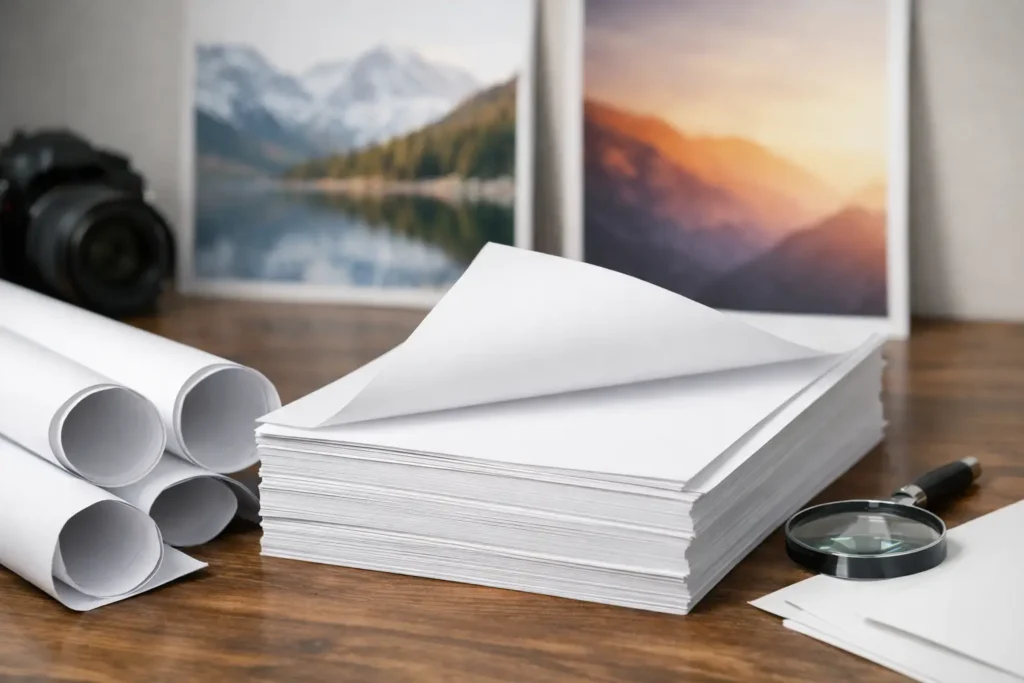
A striking poster can lose its edge fast on the wrong stock. If you are choosing the best paper for printable posters, the difference is not subtle – it affects sharpness, contrast, color depth, texture, glare, and how expensive the final piece feels on the wall.
That matters even more with digital wall art. When you are printing a downloadable piece, the file may be excellent, but paper is what turns it into atmosphere. A surreal portrait on glossy stock can look loud in the wrong room. A minimal black-and-white print on thin copy paper can fall completely flat. The right choice brings weight, clarity, and intent.
What actually makes a paper right for posters?
Poster paper is not one category. It is a mix of finish, thickness, coating, whiteness, and durability. The best option depends on the look you want and where the print will live.
For modern interiors, paper should do two jobs at once. First, it needs to reproduce detail cleanly, especially in dark tones, fine typography, and high-contrast compositions. Second, it has to feel visually aligned with the room. A matte museum-style paper creates a more refined, gallery-inspired mood. A satin or semi-gloss stock can make color feel denser and more graphic.
This is why the answer is rarely one-size-fits-all. The best paper for printable posters is usually the paper that suits the artwork, the lighting, and the framing style.
The best paper for printable posters by finish
Matte paper
If you want the safest high-style choice, start here. Matte paper is usually the strongest fit for contemporary wall art, especially black-and-white pieces, conceptual prints, architectural photography, and typography-led posters.
It has a soft, non-reflective surface, so it avoids glare and reads beautifully in bright rooms. That alone makes it ideal for living rooms, bedrooms, offices, and hallways where overhead lighting or windows can create reflections. Matte also tends to feel more elevated and less commercial than glossy stock.
The trade-off is saturation. Colors may look slightly more restrained on matte paper than on glossier finishes. For many modern interiors, that restraint is a strength, not a flaw.
Satin or luster paper
Satin sits in the middle. It gives you more depth and color punch than matte, without the high shine of glossy paper. If your poster has bold retro tones, dramatic portraits, or graphic color blocking, satin can deliver a sharper, richer look while still feeling polished.
This is a strong option when you want visual impact but not mirror-like reflections. It works especially well for statement posters in framed settings where you want some energy in the print surface.
Glossy paper
Glossy paper boosts contrast and makes colors pop. On certain designs, that can look crisp and vivid. But for interior-focused wall art, glossy often feels less curated and more mass-market.
It also reflects light aggressively. In a room with windows, lamps, or spotlights, those reflections can compete with the image itself. If you love a slick, high-contrast look, glossy can work, but it is rarely the first choice for sophisticated poster styling.
Fine art paper
This is where printable posters move into gallery territory. Fine art papers are typically matte, thicker, and more textured or premium in feel. They are made to hold detail beautifully and give prints a more collectible presence.
For statement art, especially minimal, monochrome, or surreal work, fine art paper can look exceptional. The catch is cost. It is usually more expensive than standard poster stock, and not every local print shop handles it equally well. Still, if the goal is a finished piece that feels intentional and elevated, this is often worth it.
Paper weight matters more than most people think
Paper weight affects how substantial a poster feels and how well it handles framing. Thin sheets can ripple, curl, or look cheap, even if the image quality is strong.
For most printable posters, a weight between 170 gsm and 250 gsm is the sweet spot. That range feels durable without becoming difficult to print or frame. If you are printing large-format wall art, going a little heavier can improve the finished result.
Anything around standard office paper weight is a hard no for posters you actually want to display. It lacks presence. It also tends to show imperfections more easily once mounted or framed.
If you are choosing without seeing samples first, aim for at least 200 gsm matte or satin stock. That is usually a reliable baseline for a premium poster feel.
Bright white, warm white, or natural tone?
Paper tone changes the mood of the artwork. Bright white paper creates a crisp, modern look with high contrast. It is ideal for black-and-white art, contemporary graphics, and bold minimal posters where you want clean edges and sharp separation.
Warm white or natural-toned paper softens the image slightly. This can be beautiful for vintage-inspired pieces, muted palettes, or interiors with warmer woods, plaster tones, and softer styling.
If your space leans sleek, architectural, or high-contrast, bright white is usually the stronger choice. If the room is more relaxed, layered, and earthy, a softer paper tone may feel more integrated.
Best paper for printable posters in different rooms
A home office and a sunlit living room do not ask for the same finish. Lighting changes everything.
In bright spaces, matte paper is usually the smartest move because it cuts glare and keeps the artwork readable from every angle. In darker rooms or spaces with controlled lighting, satin can add extra depth without becoming distracting.
For kitchens or high-traffic commercial spaces, durability matters more. A coated satin paper may hold up better than a delicate uncoated stock. For bedrooms, softer matte or fine art papers tend to create a calmer, more refined visual effect.
The room also affects scale. Oversized posters often look more expensive on thicker matte stock because the surface feels controlled and architectural. Smaller framed prints can get away with more finish variation.
If you frame your poster, paper choice still matters
Some people assume the frame and glazing will do all the work. Not quite. Even behind glass or acrylic, the paper still controls how the print looks.
Matte paper under glass is often the cleanest combination because it minimizes competing reflections. If you pair glossy paper with standard glass, the shine can become too much. The image may still be technically vivid, but visually harder to live with.
Texture matters too. A smoother matte stock feels modern and sharp. A heavily textured fine art paper can add depth, but it may slightly change the character of crisp graphic prints. That is not bad – just specific. A conceptual black-and-white portrait may look stunning on textured cotton paper, while a retro poster with clean lines might look better on smooth matte.
Home printer or professional print shop?
If you are printing at home, paper compatibility matters. Not every heavyweight stock feeds well through every printer, and not every home printer handles fine art papers properly. Check the printer specs before buying a thick specialty paper.
For standard home printing, a premium matte photo paper is often the best balance of quality and ease. It gives better density and detail than basic paper without creating too many handling issues.
If you are printing larger sizes or want a truly polished result, a professional print shop is usually the better move. They can offer wider paper options, better color consistency, and cleaner large-format output. With high-resolution downloadable art, this is often where the image really comes alive.
The most reliable choice for most people
If you want a direct answer, here it is. For most modern wall art, the best paper for printable posters is a heavyweight matte paper in the 200 to 230 gsm range, ideally bright white and smooth. It gives strong detail, low glare, a premium feel, and a clean contemporary finish that suits most interiors.
If your artwork is color-heavy and graphic, satin is a close second. If you want a more gallery-level look and do not mind spending more, archival fine art paper is the upgrade.
The wrong paper can make good art look temporary. The right paper gives it presence.
That is the real point. Printable art gives you freedom – scale, framing, timing, and style all stay in your hands. A bold file deserves a paper choice with the same level of intention. When the stock is right, the poster stops looking like something you printed and starts looking like something you curated.