
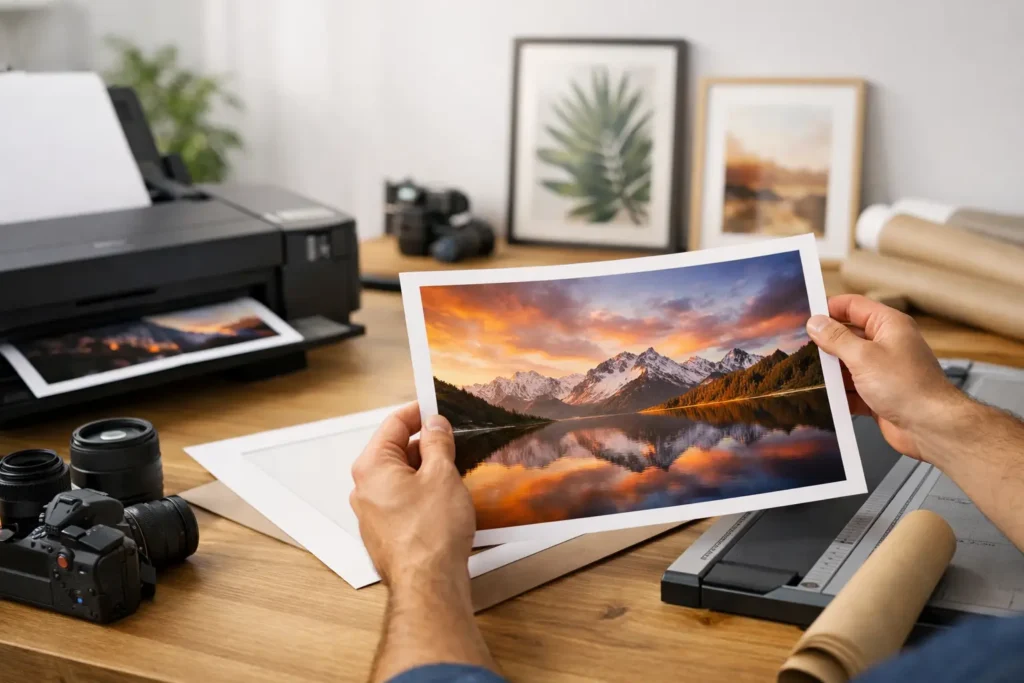
A high-resolution download can look gallery-worthy or disappointingly flat. The difference usually comes down to one thing: knowing how to print digital wall art in a way that suits the artwork, the scale, and the room. A striking black-and-white portrait needs different handling than a warm retro poster, and the right print choice is what turns a file on your screen into a statement on your wall.
Start with the file, not the frame
Before you think about paper stock or frame color, check what you actually bought. Most digital wall art comes as a high-resolution JPG, PDF, or PNG sized for specific print ratios. That matters because print quality is not just about sharpness. It is about proportion.
A 2:3 ratio file works beautifully at 16×24 or 20×30. A 4:5 file is better suited to 8×10, 16×20, or 24×30. If you force the wrong ratio into the wrong frame, the printer will either crop the composition or leave white borders you did not plan for. For conceptual art and minimal posters, even a slight crop can ruin the balance.
This is the first rule: match the file ratio to the frame size before you print. If the artwork includes multiple size options, choose the one made for your exact dimensions. If it is customizable, decide the final scale first so the print feels intentional rather than improvised.
How to print digital wall art without losing detail
Resolution is where people either save the look or sabotage it. For most wall art, 300 DPI at the final print size is the sweet spot for crisp, premium results. A lower DPI can still work for oversized prints viewed from farther away, but if you are printing a bold portrait or a text-led statement piece, softness shows fast.
You do not need to overcomplicate the math. If you want to print at 16×20, your file should ideally be around 4800×6000 pixels. If you are printing something large like 24×36, the pixel dimensions should scale accordingly. The point is simple: the bigger you print, the more image data you need.
If the file came from a reputable digital art brand, it is usually prepared for print already. Still, do not enlarge it beyond the recommended size just because the frame was on sale. Pushing a file too far creates blur, weak contrast, and muddy edges – exactly the opposite of the clean, high-impact finish modern interiors need.
Choose the print method based on the artwork
Not every piece wants the same surface. A surreal monochrome portrait, a sharp typographic poster, and a retro color composition all behave differently once ink hits paper.
For most digital wall art, a professional print shop gives the best balance of control, scale, and consistency. You get cleaner blacks, better paper options, and fewer surprises with color. This matters even more when the artwork is minimal or contrast-heavy, because flaws become obvious fast.
Home printing can work for smaller pieces, test prints, or casual styling updates. But it depends heavily on the printer. If your machine struggles with deep blacks or smooth gradients, conceptual artwork can come out banded or dull. That dramatic visual tension on screen becomes washed out on paper.
If you are printing large-scale art for a living room, office, or entryway, professional printing is usually worth it. It preserves the atmosphere of the piece, and that is the whole point.
Paper changes everything
Paper is not an afterthought. It is part of the design.
Matte paper is often the strongest choice for contemporary digital wall art. It gives a refined, low-glare finish that suits bold black-and-white work, modern photography, minimalist graphics, and conceptual pieces. It feels expensive without trying too hard.
Semi-gloss or satin can add punch to color-heavy prints, especially retro designs or artwork with richer tonal variation. It reflects more light, so colors can appear more vivid, but glare can compete with the artwork in bright rooms.
Fine art paper is the premium move if you want texture, depth, and a more gallery-like presence. It works especially well for statement pieces where materiality matters as much as image quality. The trade-off is cost. It is usually more expensive, and not every frame setup needs it.
If your room gets direct sunlight or strong overhead lighting, matte is often the safer call. If the space is moodier and you want color to hit harder, satin can be the better fit. It depends on the room as much as the art.
Color accuracy matters more than people think
Screen color and print color are not twins. They are relatives with different personalities.
Backlit screens make everything look brighter, sharper, and more saturated. Prints rely on reflected light, which means dark artwork can print darker than expected and subtle neutrals can shift. Black-and-white pieces are especially sensitive because any warmth or coolness in the paper or ink becomes noticeable.
If the print service allows color correction, use it carefully. Some labs improve files automatically, but that can alter a deliberately moody or minimal composition. For design-forward art, automatic enhancement is not always your friend.
A test print is smart when the piece is large, expensive to frame, or central to the room. Seeing a smaller version first can save you from printing a dramatic 24×36 only to realize the black tones feel too soft or the cream background reads too yellow.
Pick a size that works with the wall
One of the biggest mistakes in digital art printing is going too small. Statement art should have presence. A tiny print floating above a large sofa rarely looks curated. It looks cautious.
As a general rule, wall art above furniture should span around two-thirds to three-quarters of the furniture width. That does not mean the print itself must fill that exact measurement if you are using a mat or substantial frame, but the total visual footprint should feel proportionate.
For a hallway, bathroom, or compact apartment corner, smaller prints can be sharp and intentional. In a living room or workspace, scale creates impact. Oversized art often looks more sophisticated than a cluster of undersized pieces, especially if the artwork is graphic, minimal, or portrait-driven.
This is where digital wall art has a real advantage. You are not locked into one physical format. You can print the same file larger for a dramatic focal point or smaller for a tighter, more restrained look.
Framing is where the piece becomes part of the room
A strong print still needs a clean finish. The frame is what connects the artwork to the interior.
Black frames sharpen contrast and work beautifully with monochrome, conceptual, and editorial-style pieces. Natural wood adds warmth and can soften artwork that feels stark. White frames feel crisp in bright, minimal rooms but can lose edge on pale walls unless the print itself has enough contrast.
Mats can elevate a piece, especially smaller sizes, by giving the art breathing room. They also help a standard-size frame work with a slightly smaller print. But not every artwork needs one. Bold posters and contemporary graphic pieces often look stronger full-bleed, with no mat at all.
Acrylic glazing is lighter and safer for larger frames, while glass typically offers a more premium look. If glare is a concern, anti-reflective options are worth considering, especially for darker art.
Best practices for printing at home
If you want to print digital wall art yourself, keep your expectations aligned with your setup. Use the highest quality print setting, turn off draft mode, and select the correct paper type in the printer settings. That small detail affects how ink is laid down and can dramatically improve the result.
Use heavyweight paper if possible. Thin office paper makes even expensive artwork feel temporary. Let prints dry fully before handling them, especially if there are dense black areas. Smudging a fresh print is an easy way to ruin clean edges.
Most importantly, print at sizes your printer can genuinely handle well. A smaller, beautifully printed piece looks better than a large print full of streaks, uneven color, and weak detail.
When to use a local print shop or online printer
If you care about finish, consistency, and scale, a print shop is often the smarter route. Bring the exact file, confirm the size ratio, ask about paper options, and specify that you do not want unwanted cropping. If the artwork is meant to feel dramatic and polished, those details matter.
For premium downloadable art from brands like 21MXM, professional printing usually does the work justice. The files are built for visual impact. The print method should respect that.
The best result is rarely about choosing the fanciest option. It is about matching the file, material, size, and room so the art lands with confidence. When it does, the piece stops feeling like decor and starts setting the tone for the entire space.